

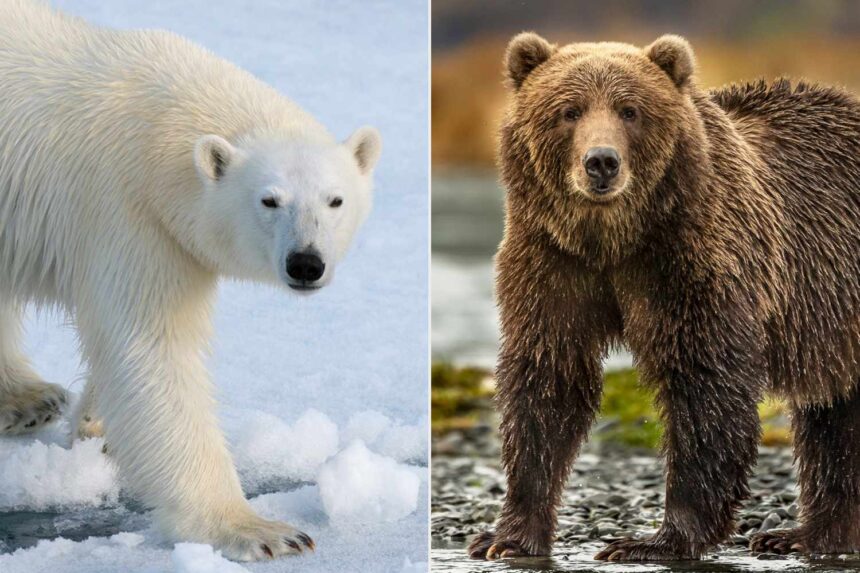
Polar bears and grizzlies are among the most iconic and powerful predators on Earth. While both belong to the bear family and share a common ancestry, they have adapted to very different environments and lifestyles. Polar bears thrive in the icy Arctic, while grizzly bears inhabit forests, mountains, and grasslands across North America.
- What Are Polar Bears?
- What Are Grizzlies?
- Polar Bears and Grizzlies: Major Differences
- Similarities Between Polar Bears and Grizzlies
- Can Polar Bears and Grizzlies Mate?
- Why Are Polar Bears and Grizzlies Meeting More Often?
- Conservation Challenges
- Scientific Importance of Studying Polar Bears and Grizzlies
- Interesting Facts About Polar Bears and Grizzlies
- The Future of Polar Bears and Grizzlies
- Conclusion
As climate change continues to alter wildlife habitats, interactions between polar bears and grizzlies have become more common, leading to increased scientific interest and even the appearance of rare hybrid bears. Understanding these remarkable animals helps us appreciate their role in ecosystems and highlights the importance of conservation efforts.
What Are Polar Bears?
Polar bears (Ursus maritimus) are large carnivorous mammals that live primarily in the Arctic region. They are uniquely adapted to survive in extreme cold and depend heavily on sea ice for hunting and travel.
Characteristics of Polar Bears
Polar bears possess several adaptations that make them successful Arctic predators:
- Thick insulating fur
- A layer of body fat for warmth
- Large paws for walking on ice
- Excellent swimming abilities
- Strong sense of smell for locating prey
Adult male polar bears can weigh between 900 and 1,600 pounds, making them one of the largest land carnivores in the world.
What Are Grizzlies?
Grizzly bears (Ursus arctos horribilis) are a subspecies of brown bear found mainly in North America. They occupy diverse habitats ranging from forests and meadows to mountain regions.
Characteristics of Grizzlies
Grizzly bears are known for their strength and adaptability.
Key features include:
- Distinct shoulder hump
- Long claws for digging
- Powerful muscles
- Thick brown fur
- Omnivorous diet
Adult males typically weigh between 400 and 800 pounds, although some individuals can grow much larger.
Polar Bears and Grizzlies: Major Differences
Although polar bears and grizzlies share genetic similarities, they differ in several important ways.
Habitat
One of the most obvious differences is where they live.
Polar Bears
Polar bears inhabit:
- Arctic sea ice
- Coastal regions
- Northern Canada
- Greenland
- Alaska
- Russia
Grizzlies
Grizzlies are commonly found in:
- Forests
- Mountains
- River valleys
- Grasslands
- National parks
Their habitat is generally much warmer than the Arctic environment.
Diet
Diet plays a major role in distinguishing polar bears and grizzlies.
Polar Bear Diet
Polar bears are primarily carnivores.
Their diet includes:
- Seals
- Fish
- Marine mammals
- Whale carcasses
Seals provide the high-fat nutrition necessary for survival in cold climates.
Grizzly Bear Diet
Grizzlies are omnivores and consume a variety of foods:
- Berries
- Nuts
- Roots
- Fish
- Insects
- Small mammals
This flexible diet helps them thrive in diverse environments.
Physical Appearance
Although both are large bears, there are noticeable differences.
Polar Bears
Features include:
- White or cream-colored fur
- Longer neck
- Narrower head
- Streamlined body
Grizzlies
Features include:
- Brown fur
- Pronounced shoulder hump
- Shorter neck
- Broader face
These physical traits reflect their different lifestyles and hunting methods.
Similarities Between Polar Bears and Grizzlies
Despite their differences, polar bears and grizzlies share many characteristics.
Common Ancestry
Scientists believe polar bears evolved from brown bear ancestors hundreds of thousands of years ago.
Because of this shared ancestry, they still possess significant genetic similarities.
Strong Survival Skills
Both species are highly intelligent and adaptable.
They demonstrate:
- Problem-solving abilities
- Excellent memory
- Strong hunting instincts
- Remarkable endurance
Solitary Behavior
Most of the time, both polar bears and grizzlies live alone except during mating seasons or when females are raising cubs.
Can Polar Bears and Grizzlies Mate?
One of the most fascinating topics involving polar bears and grizzlies is hybridization.
The Pizzly Bear
When a polar bear mates with a grizzly bear, the offspring is often called a:
- Pizzly bear
- Grolar bear
These hybrids inherit characteristics from both parent species.
Features of Hybrid Bears
Hybrid bears may display:
- Cream-colored fur with brown patches
- Intermediate body shape
- Mixed hunting behaviors
- Adaptability to multiple environments
Scientists have confirmed several hybrid bear sightings through genetic testing.
Why Are Polar Bears and Grizzlies Meeting More Often?
Historically, these species rarely interacted because their habitats were separated.
However, climate-related changes are influencing bear movement patterns.
Shrinking Arctic Ice
As Arctic sea ice declines, polar bears are spending more time on land searching for food.
Northward Expansion of Grizzlies
At the same time, grizzly bears are gradually expanding their range farther north.
These shifts increase opportunities for encounters between polar bears and grizzlies.
Conservation Challenges
Both species face environmental challenges.
Threats to Polar Bears
Major concerns include:
- Climate change
- Sea ice loss
- Reduced hunting opportunities
- Habitat degradation
Threats to Grizzlies
Grizzly bears face challenges such as:
- Habitat fragmentation
- Human-wildlife conflict
- Road development
- Resource extraction
Conservation efforts are essential for maintaining healthy bear populations.
Scientific Importance of Studying Polar Bears and Grizzlies
Research involving polar bears and grizzlies helps scientists better understand:
- Evolutionary biology
- Species adaptation
- Climate change impacts
- Wildlife management strategies
Studying hybrid bears also provides valuable insights into genetic diversity and environmental pressures.
Interesting Facts About Polar Bears and Grizzlies
Polar Bear Facts
- Polar bears can swim for long distances without resting.
- Their skin is actually black beneath their white fur.
- They have an exceptional sense of smell.
Grizzly Bear Facts
- Grizzlies can run up to 35 miles per hour.
- Their claws can exceed four inches in length.
- They play an important role in ecosystem health through seed dispersal.
The Future of Polar Bears and Grizzlies
The future of polar bears and grizzlies will depend largely on conservation efforts and environmental conditions.
Protecting critical habitats, reducing human impacts, and addressing climate-related challenges are important steps toward ensuring the survival of both species. Continued scientific research will also help wildlife managers make informed decisions about preserving these remarkable animals.
Conclusion
Polar bears and grizzlies are extraordinary creatures that demonstrate nature’s ability to adapt to vastly different environments. While polar bears dominate the frozen Arctic and grizzlies thrive in forests and mountains, both species share a common heritage and many fascinating traits.
As environmental changes bring these bears into closer contact, scientists continue to learn more about their behavior, genetics, and survival strategies. Understanding polar bears and grizzlies not only deepens our appreciation for wildlife but also highlights the importance of protecting the ecosystems they depend on for future generations.