

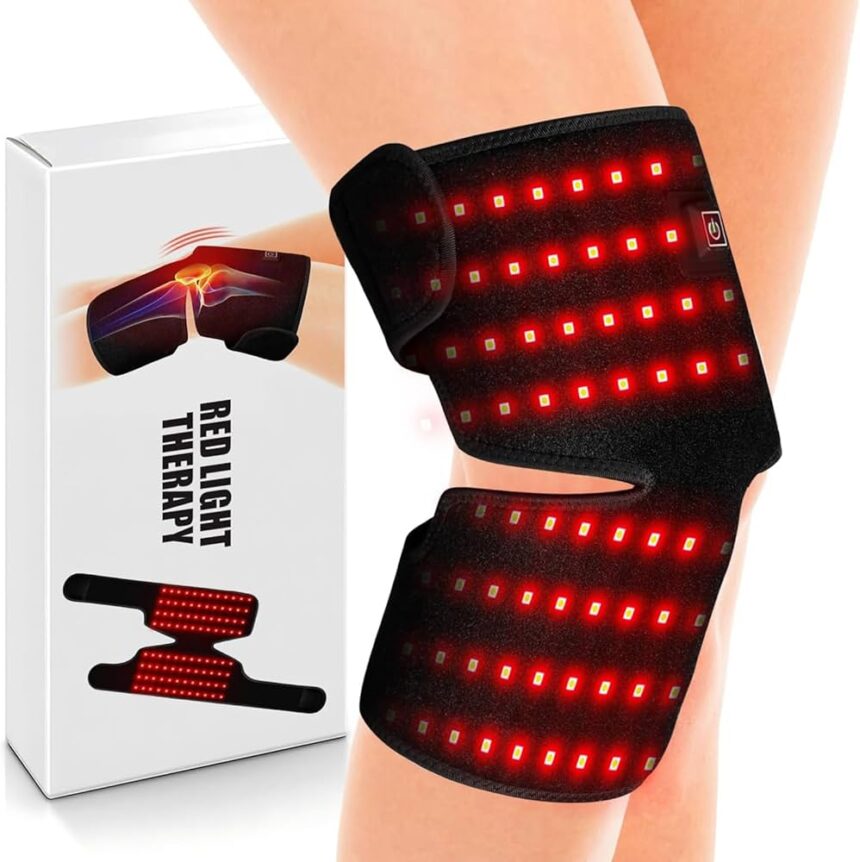
Knee pain is one of the most common joint problems affecting people of all ages. Whether it’s caused by arthritis, sports injuries, overuse, or the natural aging process, persistent knee pain can interfere with everyday activities and reduce your quality of life. Many people are now exploring non-invasive treatment options, and red light therapy for knee pain has become a popular choice.
- What Is Red Light Therapy?
- How Does Red Light Therapy for Knee Pain Work?
- Benefits of Red Light Therapy for Knee Pain
- Conditions That May Benefit from Red Light Therapy
- What Does Research Say?
- How to Use Red Light Therapy for Knee Pain
- Is Red Light Therapy Safe?
- Who Should Consider Red Light Therapy?
- Tips to Get Better Results
- Conclusion
Red light therapy (RLT), also known as photobiomodulation or low-level light therapy (LLLT), uses specific wavelengths of red and near-infrared light to stimulate the body’s natural healing processes. While it is not a cure for every knee condition, research suggests it may help reduce pain, improve circulation, and support tissue repair for some individuals.
In this guide, you’ll learn how red light therapy for knee pain works, its potential benefits, how to use it safely, and what current research says about its effectiveness.
What Is Red Light Therapy?
Red light therapy is a non-invasive treatment that exposes the body to low levels of red and near-infrared light. Unlike ultraviolet (UV) light, the wavelengths used in red light therapy do not damage the skin.
The light penetrates the skin and underlying tissues, where it is believed to stimulate the mitochondria—the energy-producing structures inside cells. This process may improve cellular function and support the body’s natural healing response.
Today, red light therapy is used for various purposes, including skin health, muscle recovery, wound healing, and joint pain management.
How Does Red Light Therapy for Knee Pain Work?
The goal of red light therapy for knee pain is to reduce inflammation and encourage tissue repair without medication or surgery.
Researchers believe the treatment may help by:
- Increasing cellular energy (ATP production)
- Improving blood circulation around the knee
- Reducing inflammation
- Supporting tissue repair
- Helping decrease pain signals
- Promoting recovery after physical activity or injury
Although studies show promising results, responses vary depending on the underlying cause of knee pain and the individual receiving treatment.
Benefits of Red Light Therapy for Knee Pain
Many people choose red light therapy because it is painless, drug-free, and easy to use.
May Reduce Pain
Some clinical studies suggest red light therapy can help reduce mild to moderate knee pain, particularly in people with osteoarthritis.
Helps Reduce Inflammation
Inflammation is a common cause of joint discomfort. Red light therapy may help lower inflammatory responses, making movement more comfortable.
Supports Healing
By stimulating cellular activity, red light therapy may assist the body’s natural repair process following minor injuries or overuse.
Improves Mobility
As pain and stiffness decrease, some users report improved flexibility and easier movement during daily activities.
Non-Invasive Treatment
Unlike injections or surgery, red light therapy does not involve needles, incisions, or lengthy recovery periods.
Conditions That May Benefit from Red Light Therapy
Red light therapy may be considered as part of a treatment plan for:
- Knee osteoarthritis
- Tendon inflammation
- Minor ligament strains
- Muscle soreness around the knee
- Sports-related overuse injuries
- General knee stiffness
However, it should not replace medical evaluation for severe injuries, fractures, infections, or sudden swelling.
What Does Research Say?
Several studies have explored red light therapy for knee pain, particularly in people with osteoarthritis. Some research indicates that photobiomodulation may reduce pain and improve joint function when used consistently over several weeks.
However, scientific findings are mixed. While many participants experience noticeable improvements, others report only modest benefits. Researchers continue to study the ideal wavelengths, treatment duration, and frequency.
For this reason, red light therapy is generally viewed as a complementary treatment rather than a standalone cure.
How to Use Red Light Therapy for Knee Pain
To get the best results, it’s important to follow the manufacturer’s instructions or your healthcare provider’s recommendations.
General guidelines include:
Keep the Device Close
Position the light according to the device instructions, usually a few inches from the affected knee.
Follow Recommended Session Times
Most home devices recommend sessions lasting between 10 and 20 minutes, several times per week. Follow the instructions provided with your specific device.
Be Consistent
Results often require regular use over several weeks rather than a single treatment.
Combine with Healthy Habits
Physical therapy, stretching, low-impact exercise, maintaining a healthy weight, and medical guidance can all support better knee health.
Is Red Light Therapy Safe?
Red light therapy is generally considered safe when used as directed.
Possible precautions include:
- Avoid looking directly into bright LEDs unless protective eyewear is recommended.
- Follow the manufacturer’s instructions.
- Do not use damaged devices.
- Consult your healthcare provider if you are pregnant, have a serious medical condition, or are unsure whether the therapy is appropriate for you.
If your knee pain is severe, persistent, or accompanied by significant swelling, fever, or inability to bear weight, seek medical attention promptly.
Who Should Consider Red Light Therapy?
You may consider red light therapy for knee pain if you:
- Have mild to moderate chronic knee discomfort
- Experience osteoarthritis-related symptoms
- Want a non-drug treatment option
- Are recovering from minor overuse injuries
- Wish to complement physical therapy or exercise
Always discuss new treatments with a qualified healthcare professional, especially if you have an underlying medical condition.
Tips to Get Better Results
To maximize the potential benefits of red light therapy:
- Use the device consistently.
- Stay physically active with low-impact exercises.
- Strengthen the muscles around your knee.
- Maintain a healthy body weight.
- Follow your healthcare provider’s treatment plan.
- Use supportive footwear if recommended.
Combining these habits with red light therapy may help improve overall knee function.
Conclusion
Red light therapy for knee pain is a promising, non-invasive treatment that may help reduce pain, improve circulation, and support the body’s natural healing process. While research suggests it can be beneficial—especially for conditions like knee osteoarthritis—it is not a guaranteed solution for everyone.
For the best results, use red light therapy consistently, follow your device’s instructions, and combine it with healthy lifestyle habits such as regular exercise, weight management, and physical therapy when appropriate. If your knee pain is severe, worsening, or linked to a serious injury, consult a healthcare professional for an accurate diagnosis and personalized treatment plan.