

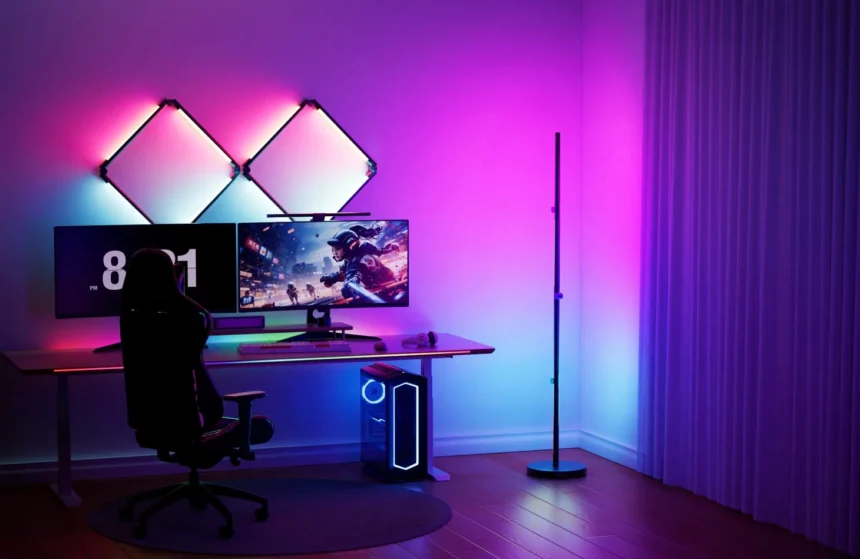
Many homeowners are looking for ways to reduce electricity costs without sacrificing comfort and style. One common question is: are light strips cheaper on power bill than house lighting? With the growing popularity of LED light strips, many people wonder whether these modern lighting solutions can help lower monthly energy expenses.
The short answer is yes. In most cases, LED light strips consume significantly less electricity than traditional house lighting, making them a more energy-efficient and cost-effective option. However, the actual savings depend on factors such as usage patterns, brightness levels, and the type of lighting being replaced.
In this guide, we’ll explore how LED light strips compare to conventional home lighting and whether they can truly reduce your power bill.
What Are LED Light Strips?
LED light strips are flexible circuit boards equipped with small light-emitting diodes (LEDs). They are commonly used for:
- Accent lighting
- Under-cabinet lighting
- Bedroom decoration
- Kitchen lighting
- Living room ambiance
- Outdoor decorative lighting
Unlike traditional bulbs, LED strips distribute light across a continuous surface, creating a modern and stylish appearance while using minimal energy.
Are Light Strips Cheaper on Power Bill Than House Lighting?
The answer is generally yes. Light strips are cheaper on power bill than house lighting because LEDs consume far less electricity than incandescent, halogen, or even some fluorescent lighting systems.
Example Calculation
Suppose you use:
- Four 60-watt incandescent bulbs = 240 watts total
- One 24-watt LED light strip
Running both for 5 hours daily:
Incandescent bulbs:
- 240W × 5 hours = 1.2 kWh per day
LED light strip:
- 24W × 5 hours = 0.12 kWh per day
This means the light strip uses approximately 90% less electricity.
Why LED Light Strips Use Less Electricity
H2: High Energy Efficiency
LED technology converts most electrical energy into light rather than heat.
Traditional bulbs waste a significant portion of energy through heat generation. LEDs remain cool and efficient, helping homeowners save on electricity costs.
Lower Wattage Requirements
LED strips require fewer watts to produce the same visual effect as conventional lighting systems.
For decorative and ambient lighting, a low-wattage LED strip can often replace multiple bulbs.
Better Light Distribution
LED strips provide even lighting across a space. Because they eliminate dark spots and uneven illumination, fewer fixtures may be needed.
How Much Money Can You Save?
The amount you save depends on:
- Electricity rates in your area
- Daily usage hours
- Number of traditional lights replaced
- Quality of LED strip lights
Sample Monthly Cost Comparison
Assuming electricity costs $0.15 per kWh:
Traditional Lighting
- 240W used for 5 hours daily
- Monthly consumption: 36 kWh
- Monthly cost: $5.40
LED Light Strip
- 24W used for 5 hours daily
- Monthly consumption: 3.6 kWh
- Monthly cost: $0.54
Monthly savings can exceed 80–90%, especially when replacing multiple traditional bulbs.
Advantages of Using Light Strips Instead of Traditional House Lighting
H2: Reduced Electricity Bills
The primary benefit is lower energy consumption, which directly reduces power costs.
H3: Longer Lifespan
Most quality LED light strips last between 25,000 and 50,000 hours.
Traditional bulbs often require replacement after 1,000 to 2,000 hours.
H3: Lower Maintenance Costs
Because LEDs last much longer, homeowners spend less money on replacements and maintenance.
H3: Flexible Installation
LED strips can be installed:
- Behind TVs
- Under cabinets
- Along ceilings
- In stairways
- Around furniture
This flexibility allows homeowners to create effective lighting using less power.
When Light Strips May Not Be Cheaper
Although LED strips are energy-efficient, there are situations where they may not provide maximum savings.
Using High-Brightness Strips
Some premium RGB or smart LED strips consume more power than basic models.
Running Lights Continuously
If LED strips are left on 24/7, electricity usage can still add up over time.
Replacing Main Lighting Completely
For large rooms requiring bright illumination, LED strips alone may not provide sufficient light. Additional fixtures may be necessary.
Tips to Maximize Energy Savings
To get the most savings from LED light strips:
Choose High-Quality LEDs
Look for products with high energy-efficiency ratings and positive reviews.
Use Smart Controls
Install timers or smart plugs to automatically turn lights off when not needed.
Select Appropriate Brightness
Avoid purchasing overly powerful strips for areas that require only ambient lighting.
Combine with Natural Light
Use daylight whenever possible to further reduce electricity consumption.
Environmental Benefits of LED Light Strips
Besides lowering electricity bills, LED strips offer environmental advantages.
They:
- Reduce energy consumption
- Lower carbon emissions
- Produce less heat
- Last longer than traditional bulbs
- Create less electronic waste
For environmentally conscious homeowners, switching to LED lighting can be a practical step toward sustainability.
Conclusion
So, are light strips cheaper on power bill than house lighting? In most cases, the answer is yes. LED light strips consume significantly less electricity than traditional lighting options while providing attractive, flexible, and long-lasting illumination.
By switching from incandescent or halogen bulbs to LED light strips, homeowners can reduce energy consumption, lower monthly power bills, and enjoy modern lighting solutions. While savings vary based on usage and installation, LED light strips remain one of the most energy-efficient lighting choices available today.
If your goal is to cut electricity costs while enhancing your home’s appearance, LED light strips are a smart investment that can deliver both financial and environmental benefits.